.BwweyAj6_ZJlM9M.webp)
Tracking query diversity over time is hard. How can you tell whether the variety of inflow queries is growing?

For SEO teams, understanding not only total inflow but also the diversity of queries that drive that inflow is an important way to measure whether a content strategy is broadening the site’s reach.
This matters especially for article-style content. After a rewrite, teams often want to know whether the page is now attracting a wider range of search intent than before.
Search Console alone makes that difficult. It shows query data, but it is not designed to track the change in query variety over time in a way that supports detailed operational analysis.
What does “query variety” mean?
It refers to the number of different types of search intent represented in the queries bringing users to a page. For example, if a breakfast article originally attracted only queries around “breakfast recipes” but later begins to receive visits from queries including “healthy”, “quick”, or “easy”, the page is now covering a broader range of demand.
The practical problems teams face
- You cannot directly track the trend of query variety. Search Console provides raw query data but does not show how the variety count is changing over time.
- Detailed customization is limited. It is hard to analyze specific URL groups or custom query groups inside the standard interface.
- Large-scale analysis requires external tooling. To do deeper analysis, teams often export data to BigQuery and build their own dashboards, which takes time and technical effort.
Amethyst makes query variety easier to understand
Amethyst’s Search Analytics helps teams track how query diversity changes over time in a more operationally useful way.
Dashboard
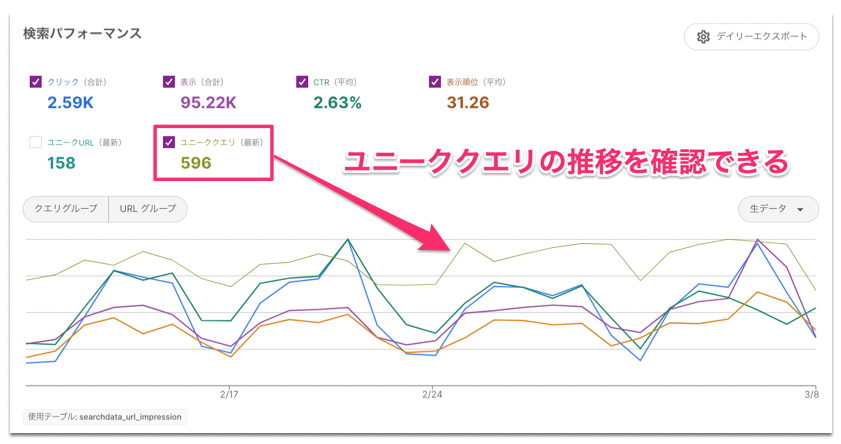
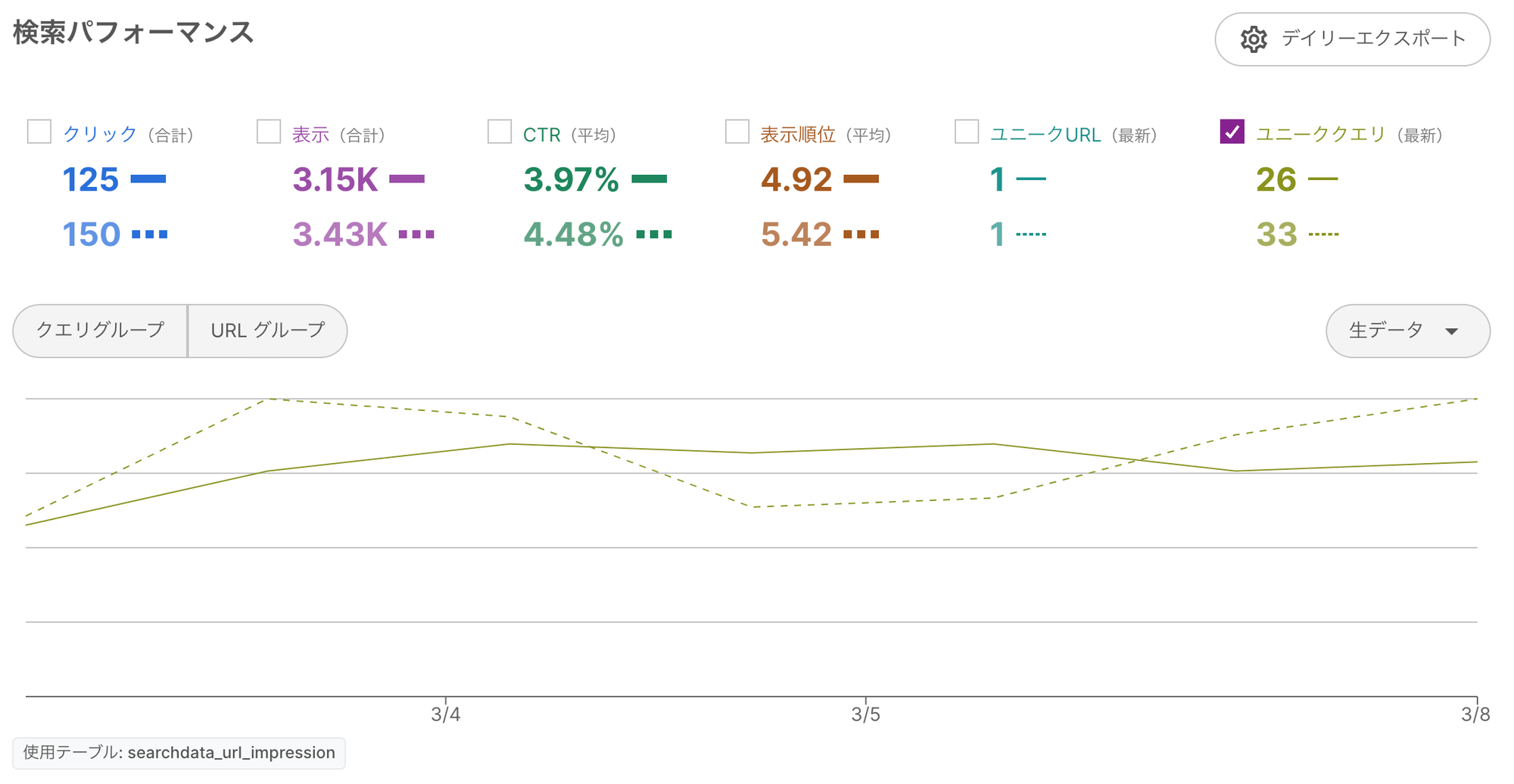
With this kind of view, teams can:
- Evaluate the effect of a specific initiative. If the content structure or on-page copy changes, you can compare the query variety before and after the change.
- Measure campaign impact. During a campaign period, you can see what kinds of queries increased and what kinds fell back.
- Plan content around trends. By understanding what query groups are gaining momentum, you can decide what new content to publish next.
Summary
Search Analytics gives SEO teams a clearer way to understand how their query footprint is changing. Instead of relying on intuition or ad hoc exports, teams can see whether their content is actually reaching a broader set of search needs over time.
Contact us
If you would like a more detailed explanation or documents about Amethyst, please contact us using the form below. A member of our team will follow up based on your message.